Why Every Town Centre Now Looks the Same (And the Small Signs It Might Change)
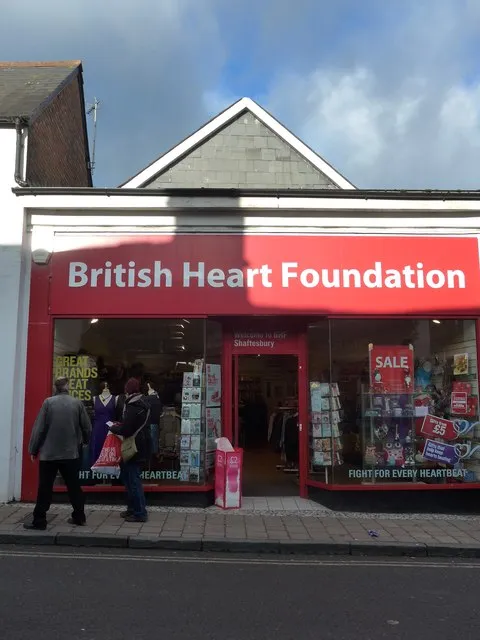
Photo: Basher Eyre , CC BY-SA 2.0, via Wikimedia Commons
Pick a town. Any town. Not a city centre — a proper town, the kind with a market square and a car park that takes coins.
Start at the pedestrianised bit and walk for two minutes. You'll pass a barber with six chairs and a queue out of the door at 11am on a Tuesday. Then a vape shop, brightly lit, entirely empty. Then a charity shop with a window display of a lampshade and a Jenga set. Then a second vape shop, which is somehow open too. Then a shuttered unit with blue paper over the glass and a leaflet on the door about a planning application from 2023.
It's not a coincidence that this is happening everywhere at once. And it's not just 'the internet', however much we like that answer.
The three-unit shuffle
What we're seeing is a form of commercial natural selection. In a town centre where footfall has fallen and costs have risen, only certain kinds of businesses can make the numbers work.
Barbers survive because they're labour-light in property terms, they take cash or card on the spot, they need almost no stock, and they've become a social space in a way that few shops still are. Vape shops survive because margins are high and leases are cheap — they're often the only people willing to sign on a unit that's been empty for a year. Charity shops survive because of mandatory 80% business rates relief in England, a volunteer workforce and a supply chain of donated stock.
None of those three are villains. But they are all symptoms of the same underlying condition: a high street that has become a place where only low-cost, low-stock, low-risk operators can afford to exist.
Rates, rents and the shape of a bill
Business rates get blamed a lot and it's easy to see why. A shop pays rates based on 'rateable value', which is roughly tied to rent — and that's before the rent itself, the insurance, the utilities, the staff, the stock. If your physical shop needs to make, say, £90,000 a year just to open the door, you're already in a different business to the one on the website with no premises at all.
The 2026 revaluation — the first since 2023, based on rental values from April 2024 — will have shifted some of this around, and many smaller operators will find their bills moving. But tinkering with the multiplier doesn't change the fundamental maths. The high street's problem isn't that rates are unfair. It's that a shopfront now has to compete with a business model that has no shopfront.
We didn't help
It's tempting to blame councils, or landlords, or the government of the day. There's plenty to go round. But most of us changed our habits first and asked questions later.
We buy our socks online. We book the hairdresser. We get the birthday present delivered. We compare prices on our phones while standing in an actual shop, then walk out. We use the town centre for four things — a haircut, a coffee, a charity shop browse and a parcel collection — and everything else goes to a warehouse in the Midlands.
Meanwhile, out-of-town retail parks with free parking have quietly hoovered up the middle ground: the bedding, the household stuff, the things that used to justify a Saturday in town.
The car park problem
Here's a boring thing that matters enormously: parking. Where councils have made town centre parking paid, restricted or confusing, footfall has usually gone one way. Out-of-town retail is free to park in, always, forever. A shopper doing a mental sum between a £4 car park and a free one with a Starbucks attached does not need long to decide.
Permitted development rules have also let plenty of former offices and retail units convert to flats with minimal fuss. That keeps buildings in use, which is genuinely good — but it also means the shopfronts disappear from the equation entirely, and a high street becomes a corridor of doors rather than businesses.
Where it's still working
It isn't all blue paper and empty shelves. There are pockets of resistance, and they tend to share a few traits.
Markets. Not the twee kind with a sign saying 'artisan', but real ones with a fruit and veg stall, a butcher and a bloke selling batteries. Markets have low barriers to entry and they pull people in for a specific reason.
Community ownership. Pubs, shops and even old banks bought by local shareholders. Slow, exhausting, occasionally brilliant.
Libraries and leisure. Sounds dull. Isn't. A town where the library is open, warm and free has a reason for people to come into the centre at all — and every other business benefits from that footfall.
Mixed use. A unit that's a café by day, a bar by night, with a record stall in the corner. Small operators sharing space and costs.
Meanwhile use. Councils and landlords letting a unit cheaply for six months to a pop-up, a maker, a community group. The rent is low, but a lit window beats a papered one every single time.
What would actually move the needle
A short, unglamorous list:
- Free or cheap short-stay parking, properly signposted.
- Rates that reflect what a shop actually turns over, not just its theoretical rent.
- Landlords willing to take a lower rent for a longer, occupied lease.
- Councils that use empty units for something — anything — rather than waiting for a perfect tenant.
- And shoppers who occasionally spend a fiver in the shop rather than ordering it for tomorrow.
None of that is a silver bullet. The high street isn't coming back as it was in 1998, and anyone promising otherwise is selling something.
But the difference between a town centre that feels alive and one that feels like a set from a disaster film isn't usually a big policy. It's whether three or four units are lit up. Get those right and the rest of the street starts to look like a place again.